

Importing8 min
What Indian limestone costs to import and what drives the price
There is no useful universal price per square metre. A buyer needs a like-for-like landed-cost model covering product, logistics, risk and local charges.
Why a single price answer is misleading
Indian limestone import cost is not one stable number. The material may be quoted by area, piece, weight or crate, while the delivered cost combines quarry selection, processing, packing, inland movement, international freight, insurance where used, border charges, local handling and final delivery. Currency and freight conditions also move independently of quarry pricing. A low factory figure can therefore produce a higher landed cost than a fuller offer once missing items and avoidable breakage are included. Buyers should ask what is included, the unit of measure and the commercial term before comparing headline prices.
The intended product changes the calculation. Large calibrated paving, small coursed pieces, steps and cut-to-size work use the block or slab differently and require different handling. A tighter colour selection lowers usable recovery. A labour-intensive edge or surface adds processing. Thick pieces increase weight per square metre and may reduce the area that fits within a lawful payload. There is no responsible way to publish a permanent universal figure without specifying these variables and the destination costs. A landed-cost worksheet based on current written quotations is more useful than an attractive historic benchmark.
Material, selection and quarry yield
The first layer is the stone itself. Beds differ in availability, colour consistency, natural split, block size and the proportion that can be processed into the requested format. Common sizes that work efficiently with the available stone generally yield better than unusual modules or very large pieces. If a buyer requires a narrow Dove Grey selection, rejects normal markings or asks for exceptional dimensional consistency, more material may need to be sorted out. That does not make the requirement wrong, but its cost should be visible rather than disguised in a vague grade name.
Ask whether the quotation covers one bed, a blend or whatever matching material is available during production. Clarify how the supplier grades ordinary geological features and what happens to pieces outside the approved range. The answer affects both price and repeatability. Very low pricing can reflect broad selection, relaxed tolerances or opportunistic stock rather than production from a consistent source. Equally, a higher quote is not proof of better control. The buyer needs samples, written tolerances, packing detail and inspection evidence that connect the price to a defined product.
Processing choices that alter cost
Natural riven stone may need splitting, sizing and edge work, while honed, polished and brushed products require additional machine stages and careful handling. Calibration adds control to the underside or overall thickness, but the precise meaning of calibrated must be stated because suppliers use the word differently. Sawn edges, hand-dressed edges, chamfers, grooves and bespoke profiles each affect machine time and yield. The cost of a finish should be considered with its intended use: a lower processing price is not a saving if the surface is unsuitable for wet external paving or the thickness creates installation problems.
Dimensions also influence both production and logistics. Mixed-size project packs can use material efficiently when the pattern suits normal output, whereas a schedule dominated by one awkward size may create waste. Small pieces require more counting and handling; large pieces need stronger packing and are harder to replace if damaged. Ask for the actual manufacturing tolerance rather than assuming the nominal dimension is exact. If pieces must be sorted, dry laid, numbered or produced to a drawing, include that service in the comparison. Clear drawings and one approved schedule reduce rework and quotation allowances.
Packing, payload and freight
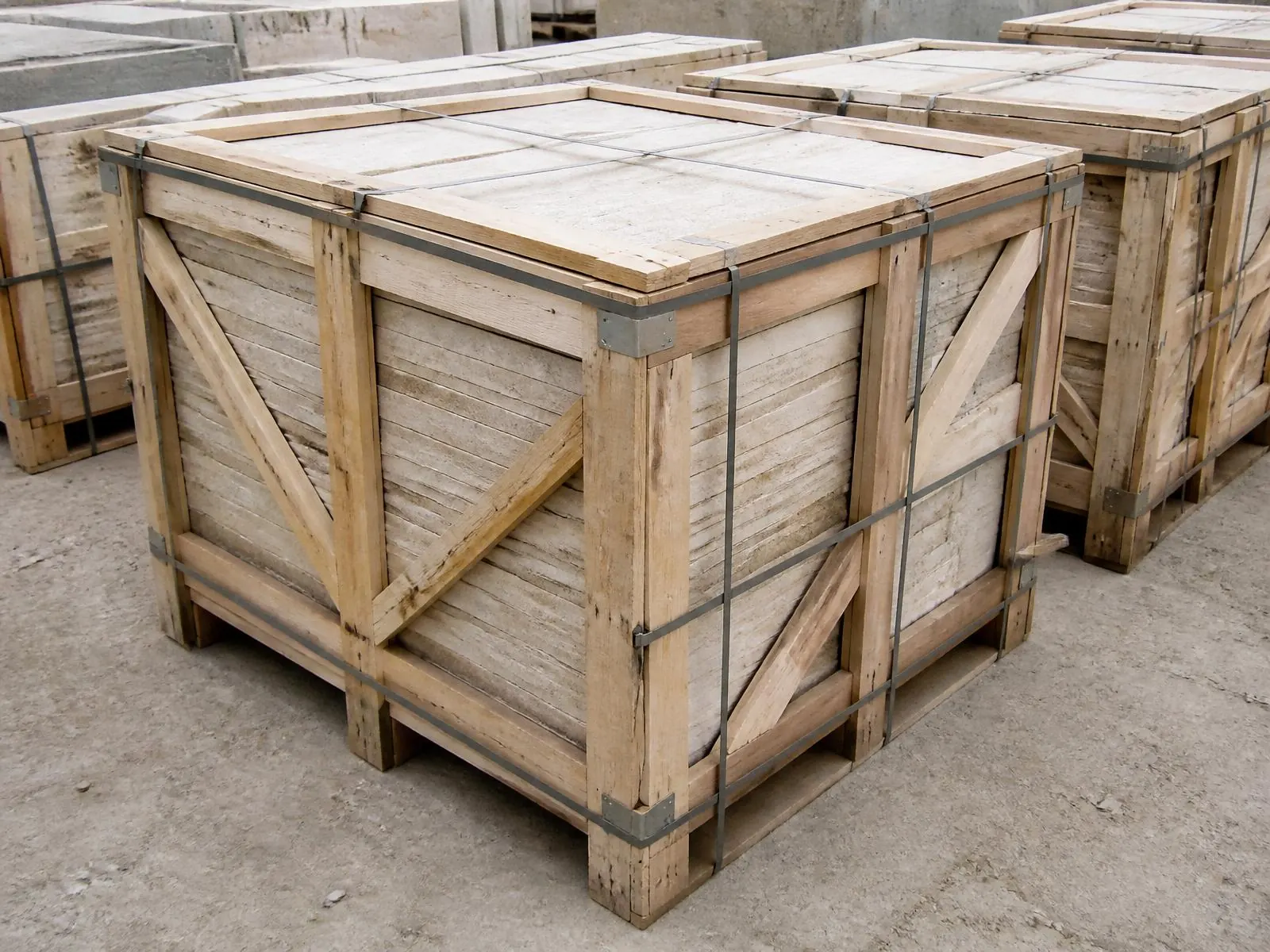
Export packing is part of the product, not an optional afterthought. Crate timber, supports, separators, moisture protection, strapping and the arrangement of pieces affect cost and damage risk. Heavy stone must be distributed safely, and fragile profiles or polished faces need different protection from robust riven paving. Ask for crate dimensions, gross and net weights, pieces and area per crate, and the proposed loading plan. These figures allow a buyer to check totals, warehouse handling and whether the quoted area is realistic for the weight and package configuration.
International freight can change between enquiry and shipment, so establish how long a freight element is valid and who carries the risk of later movement. The chosen commercial term determines which transport stages and formalities sit with the seller and which sit with the buyer, but a short term alone does not explain every local fee. Request a written inclusion list. Insurance, destination handling, customs representation, examinations, storage caused by delay and onward delivery may be separate. Avoid assuming a freight-inclusive quote is the final delivered cost unless the exact named destination and exclusions are documented.
Duties, taxes and destination charges
Import duties and taxes depend on the destination, product classification, origin rules and the buyer's tax position. They should be confirmed with a qualified customs adviser using the actual product description, not copied from another importer's invoice. Similar-looking stone products can be classified differently depending on how they are worked. Documentation such as the commercial invoice, packing list and origin evidence must match the shipment. An incorrect assumption can distort the comparison and delay clearance, so treat official charges as a current destination-specific input rather than a supplier's generic promise.
Local costs are often underestimated because they arrive through several parties. Clearance, terminal or depot handling, document fees, inspections when required, unloading, pallet or crate disposal, local haulage and warehouse labour may all matter. Delivery equipment and access should be planned for heavy crates. Add a sensible risk allowance for breakage, shortages and unusable pieces based on the product and your own operating experience, without converting that allowance into an allegation that damage is inevitable. A realistic landed figure helps a merchant price replacements and customer service rather than relying on every saleable piece arriving perfectly.
Build a like-for-like landed comparison
Create one worksheet for each offer. Use the same saleable quantity and convert all product units consistently. Record product specification, stone value, packing, inland and international transport, insurance, estimated border costs, local charges and final delivery. Separate recoverable taxes from true cost according to professional advice. Note quotation currency, validity, payment stages and the date used for conversion. Then calculate landed cost per saleable unit, not merely shipped area, and test how the result changes if freight, exchange rate or usable yield moves.
Finally compare the non-price controls: approved range, tolerances, inspection, traceability, packing, claim process and communication. The cheapest landed spreadsheet remains expensive if the goods cannot be sold or installed. Ask suppliers to explain discrepancies rather than forcing unlike offers into the same box. A good quotation makes assumptions visible and can be updated when current freight or destination charges are known. Buyers who follow that discipline can negotiate intelligently, decide where tighter selection is worth paying for and give customers a price supported by evidence instead of guesswork.
Key takeaways
- Compare current landed cost per saleable unit, not only the factory price.
- Selection, dimensions, finish, thickness and packing all affect product and freight cost.
- Confirm duties, taxes and classification for the actual destination and product.
- Document quotation validity, currency, inclusions and local exclusions.
Related reading
More from the journal
Related stones and reading


Price a defined limestone order
Send the stone, finish, sizes, quantity and delivery basis you need for a current quotation.