

Importing8 min
How to order natural stone by the container — sizes, packing and lead times
A successful container order begins with a production-ready schedule and ends with a checked packing list, not a vague area and colour request.
Turn the enquiry into a production schedule
Begin with the exact stone, colour range, finish, edge treatment, nominal dimensions, thickness and quantity for every line. State the intended application because paving, walling, steps and interior tiles create different expectations. Draw bespoke pieces and identify units, visible faces and acceptable joint assumptions. If the order uses a repeating pattern, provide the ratio of each size and check that the total creates complete repeats. A request for one container of mixed sizes is not production-ready and invites the factory to make decisions the buyer should control.
Clarify tolerances in writing. Natural riven thickness is inherently more variable than machined thickness, while sawn length and width still need agreed limits. Define whether dimensions are nominal or actual and whether edges are sawn, hand dressed, tumbled or otherwise worked. Ask what calibrated means for that supplier. Confirm how area is calculated for joints, whether broken or rejected pieces are excluded and how quantity overrun or underrun will be handled. A signed schedule with revision number prevents an old spreadsheet being used after changes.
Plan quantity around weight and saleable use
Stone containers are usually constrained by weight and safe load distribution before they run out of volume. The achievable area therefore depends on density, thickness, format, crate design and applicable transport limits. Do not copy a quantity from a different product. Ask the supplier for expected net stone weight, gross packed weight, crate count and area or pieces by crate, then have the loading proposal checked against the logistics arrangements. Mixed products complicate the plan because each line has a different weight and packing efficiency.
Order quantity should also reflect the project or stock programme. Include an allowance determined by layout, cutting, selection and replacement needs, but do not rely on a universal percentage. Patterned paving, diagonal layouts and heavily selected colour ranges can have different usable yields. For phased projects, consider ordering all visible matching material together when storage and cash flow permit. Later production can vary. Where exact quantities are critical, agree whether the final invoice follows produced quantity and what variation the buyer will accept.
Design packing for the product and journey
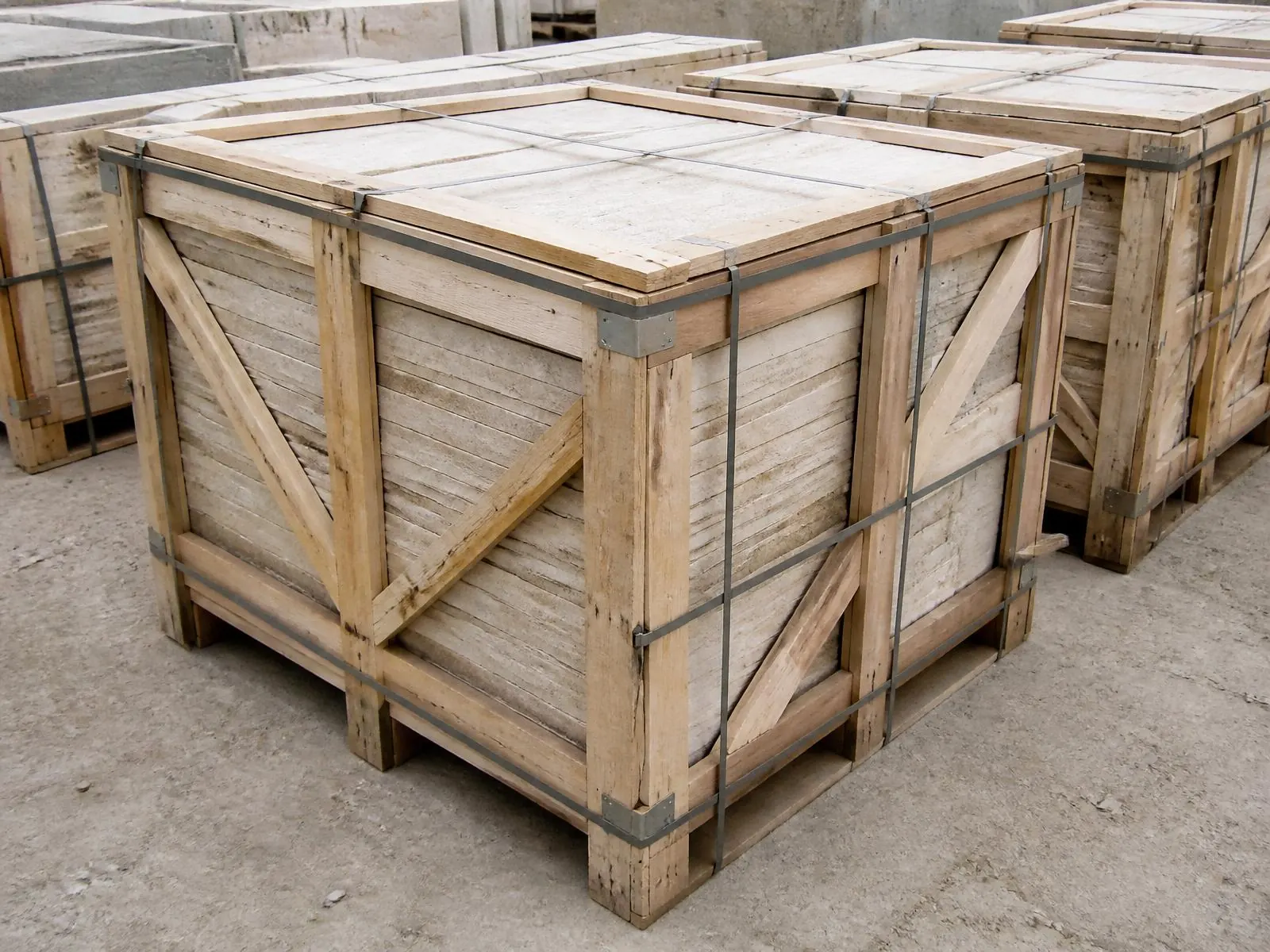
Packing must restrain heavy stone while protecting the surfaces and edges that matter. Ask about crate construction, internal supports, separators, wrapping, strapping and moisture management. Thin tiles, long steps, polished faces and riven paving do not need identical arrangements. Pieces should not be able to rub, tip or carry loads through vulnerable corners. Timber and packaging may need to meet destination rules, which the parties should confirm before production. Crate bases must suit the planned lifting equipment and remain stable during handling.
Specify crate identification. Each package should link to the packing list and show product, size, quantity and gross weight in a form warehouse teams can use. Bespoke pieces may need drawing references or sequence numbers. Ask for photographs of representative packed crates before closure and of loaded crates before the doors are sealed. Photographs do not prove hidden quality, but they establish how the order was arranged. Agree whether mixed sizes can share a crate and how small pieces will be protected and counted. Clear labelling saves labour and mistakes at destination.
Understand lead time as stages, not a promise
A responsible lead-time discussion separates quarry availability, block or slab selection, processing, drying or treatment where relevant, quality control, packing, documentation, collection and international transport. Each stage depends on the approved specification and current capacity. Bespoke work, tight sorting and late drawing changes can extend production. Weather may affect quarrying or natural drying, and logistics schedules can move. Because conditions vary, ask for a current stage-based programme rather than assuming a fixed universal number of days.
Identify what starts the clock: deposit receipt, approved samples, signed drawings, final schedule or another agreed milestone. Also identify buyer dependencies such as label artwork, import instructions and balance payment. Request progress updates tied to observable stages, for example material selected, processing underway, inspection complete and crates closed. Avoid treating an estimated readiness date as a guaranteed arrival date unless the contract expressly provides that commitment. Build commercial contingency into stock launches and installation programmes instead of promising customers a date based on the earliest estimate.
Inspect before loading
Agree an inspection plan when placing the order. It should cover identity, representative colour range, finish, dimensions, thickness, edge work, piece counts, visible defects, crate labels and packing. Decide how samples will be selected and what record will be provided. Photographs should show ordinary production across several pieces, not only close-ups of the best stone. Technical documents, where required, should relate to the specified material. Inspection reduces risk but cannot make natural stone uniform or reveal every face inside a closed package.
Define how non-conforming work will be handled before loading. Reworking or replacing pieces at origin is usually more practical than discovering an issue after arrival. Do not waive inspection simply because a dispatch deadline is approaching without recording the risk. Check the draft commercial invoice and packing list against the purchase order, including descriptions, quantities, weights, crate numbers and origin information. Ensure logistics and customs advisers receive documents early enough to review them. The physical goods and paperwork should tell the same story.
Control changes and prepare for arrival
Use one contact on each side and keep approvals in writing. A changed size can affect quarry yield, crate design, container quantity and price, so require a revised schedule and commercial confirmation rather than accepting an informal message. Record approved samples and finish references. State whether the supplier may substitute a bed, thickness or pack arrangement; if not, require approval before any deviation. Payment milestones should correspond to the agreed contract and evidence, with independent advice where appropriate for a new relationship.
Before dispatch, arrange clearance, delivery access, lifting equipment, a safe unloading area and dry, stable storage. Heavy crates require competent handling and should not be opened or stacked casually. On arrival, check seals and package condition, record damage before moving goods where practical, and reconcile crates with the packing list. Inspect enough material promptly to meet contractual notice requirements. Keep labels and evidence for any claim. Container buying works well when specification, production, packing and receiving are treated as one connected process rather than separate transactions.
Plan how the stock will be located after unloading. Crate labels should remain visible, and related sizes or sequenced pieces should not be scattered across a yard. Give sales and installation teams the same packing list so they know which crates can be opened first and which contain special components. If samples or replacement pieces are retained, label them with the order and batch reference. Basic warehouse traceability prevents a well-controlled shipment from becoming an unidentified mixture after arrival.
Record unopened crate weights and storage limits where warehouse safety procedures require them. Protect packages from unstable ground and prolonged weather exposure until competent staff can unpack the stone.
Key takeaways
- Issue a revision-controlled schedule with dimensions, tolerances, finishes and quantities.
- Confirm net and gross weights, crate details and loading plan for the actual product.
- Treat lead time as a current stage-based estimate with clear start conditions.
- Inspect goods, packing and documents before loading and again on arrival.
Related reading
More from the journal
Related stones and reading


Plan a container specification
Send your size schedule, finish, quantity and packing needs for a production-ready discussion.