

Buying guide8 min
What to ask a stone supplier before your first order
The best first-order questions turn claims into a documented specification and reveal how a supplier handles variation, inspection and problems.
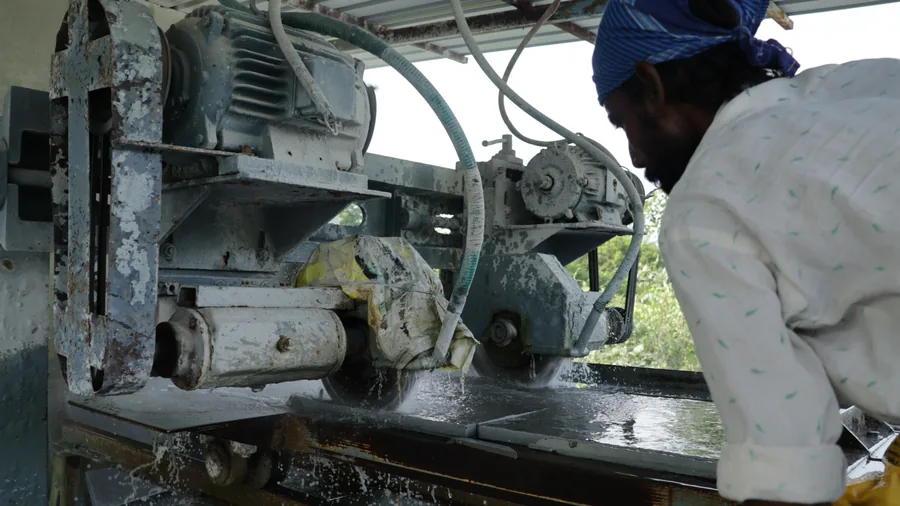
Can you identify the stone and its source?
Ask for the commercial name, producing area, current quarry bed or source arrangement and any alternate names used in your market. This matters because natural stone names overlap. Shahabad and Tandur describe material from the same limestone belt on the Karnataka and Telangana sides, and UK or European merchants may call grey material Tandur Grey or Dove Grey. A supplier should explain the relationship without claiming that every bed is identical. Source traceability helps with sample approval, technical documents and later replenishment.
Ask whether the order will come from one controlled source or a blend and whether substitution requires your approval. Request representative current-production samples rather than relying only on old project photographs. Check samples wet and dry and in the actual finish. Ask what natural variation, markings, cleft, filled features or repairs are considered normal. A good answer acknowledges a range and helps define it. Promises of perfect uniformity in natural limestone are less useful than honest sorting criteria supported by multiple pieces.
What exactly does the quotation include?
Request a line-by-line product description: stone, selection, finish, edge treatment, dimensions, thickness and tolerances, quantity basis, packing and any special inspection. Ask whether sizes are nominal or actual and how area is calculated. Terms such as calibrated, premium, brushed and export quality need physical definitions. If bespoke work is involved, use controlled drawings. Confirm price currency, validity, taxes if applicable, payment stages and how final produced quantity affects the invoice. This turns a marketing offer into something that can be compared.
Ask for an explicit logistics inclusion and exclusion list alongside the agreed commercial term. Identify who arranges inland movement, international freight, insurance, clearance, destination handling and final delivery. Current costs and responsibilities vary, so avoid assuming that another buyer's arrangement applies. Clarify what documents the supplier provides and who checks destination requirements. A slightly higher transparent quote may be easier to budget than a low figure with undefined packing and freight. Compare landed cost and risk, not only the factory unit price.
How do you control production and quality?
Ask who converts your purchase order into production instructions and how revisions are controlled. Find out how the supplier checks identity, colour range, finish, length, width, thickness, edges, piece count and visible condition. Request the proposed inspection record and representative photographs before packing. If independent inspection is important to your business, agree access and timing before placing the order. Inspection should use the approved specification, not a vague internal grade. Ask what happens to rejected pieces and whether rework is checked again.
Where technical performance matters, ask what evidence exists for the current material and finish. Documents should state the method and specimen represented; generic values or results from a different bed should not be stretched into a batch claim. Requirements vary by application and destination, so involve the project's qualified advisers. A credible supplier is comfortable stating what has and has not been verified. Be cautious when precise performance claims arrive without a traceable document or when one result is presented as covering every thickness and finish.
How will the order be packed and documented?
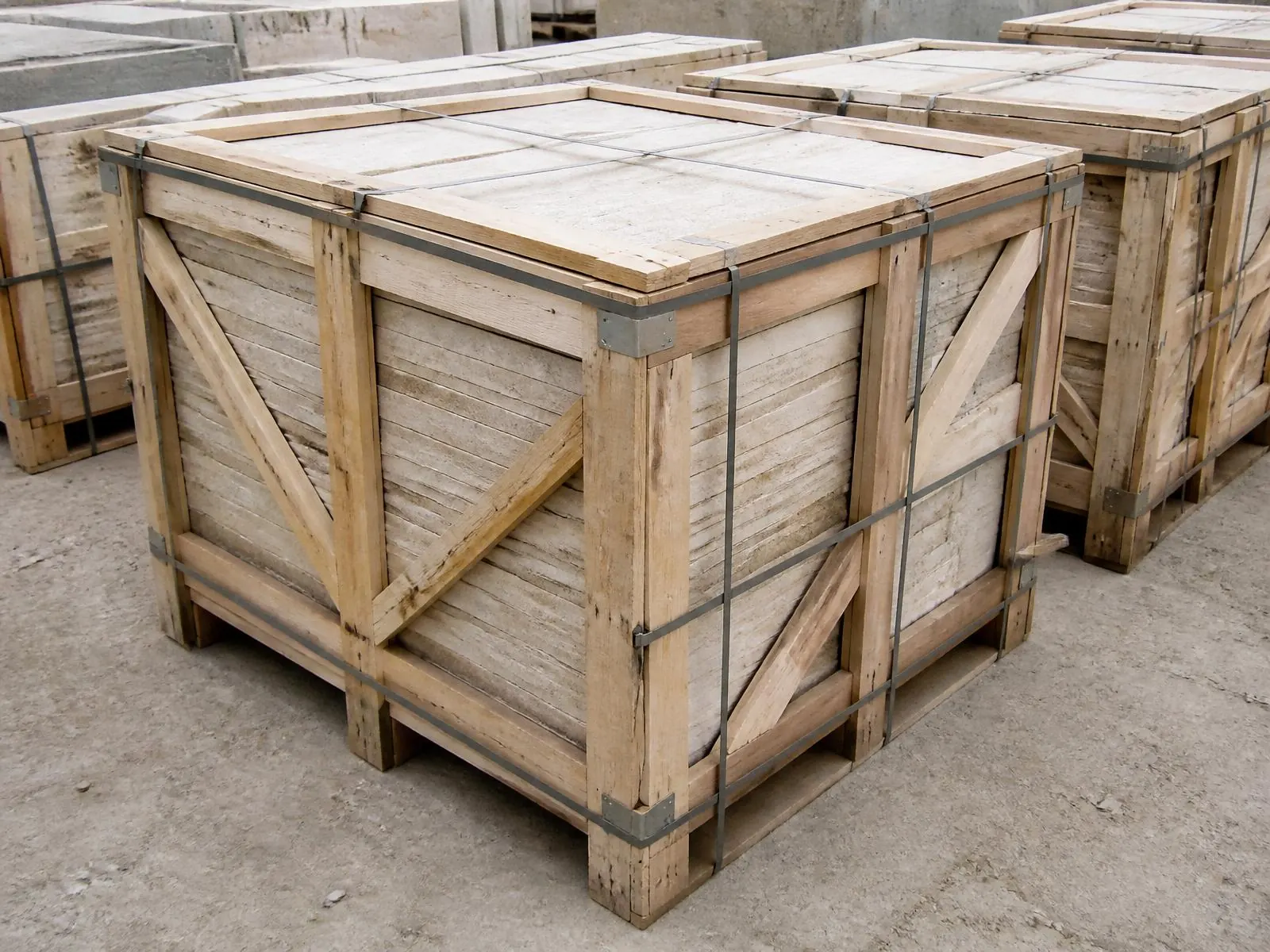
Ask for the packing method appropriate to the product: crate construction, supports, separators, wrapping, strapping, moisture protection and treatment of fragile edges or polished faces. Request expected crate count, dimensions, net and gross weights, pieces or area per crate and the loading plan. Confirm that packaging meets destination requirements and works with your unloading equipment. Ask how crates will be labelled and linked to the packing list. Photographs before closure and after loading provide a useful handling record.
Confirm the commercial invoice, packing list, origin evidence and any product-specific documents needed for the destination with your customs adviser. Descriptions, quantities, weights and package numbers should agree across the paperwork. Ask when drafts will be available for review and how corrections are managed. Documentation is not clerical decoration: errors can create clearance delays and cost. Do not ask the supplier to guarantee another country's classification or tax treatment without qualified confirmation. Assign responsibility clearly and have import instructions ready before dispatch.
What is the realistic programme and communication plan?
Ask for a current programme broken into selection, processing, inspection, packing and logistics rather than one unsupported arrival promise. Establish which approval or payment starts production and which buyer decisions can hold it up. Quarry conditions, capacity, bespoke processing and transport availability can change, so request updates at agreed milestones. Avoid specific universal lead times; the useful answer is the supplier's current estimate for the defined order, assumptions and contingency. Do not commit the earliest possible date to your customer as though it were guaranteed.
Agree one commercial contact and one approval channel. Ask how frequently progress will be reported and what evidence accompanies a request for a payment milestone. Time-zone or language differences are manageable when schedules and decisions are written clearly. Notice how the supplier handles detailed questions before the sale: precise answers, acknowledged unknowns and updated documents are better signals than immediate reassurance. Also ask who is available if a document or loading issue appears outside the normal sales conversation.
How are shortages, damage and claims handled?
Before ordering, ask what inspection the buyer must perform on arrival, what notice period applies and what evidence is required for a claim. Clarify how concealed damage, count shortages, specification differences and normal geological variation are distinguished. Ask what remedies may be considered and who controls damaged goods while a claim is reviewed. Insurance and carrier procedures may impose separate requirements. Record package condition, crate labels and representative material promptly, and retain documents. A written process does not guarantee agreement, but it avoids inventing one after a problem.
For a first order, consider a manageable, representative specification rather than combining every possible product and custom detail. Keep approved samples, final schedules, inspection records and correspondence. Review the arrival with the supplier, including what worked. A dependable relationship is built through repeatable source control, realistic promises and fair resolution, not slogans. The central question behind all the others is whether the supplier can connect the sample, quotation, production, packing and paperwork to the same defined order. If that chain is clear, the first purchase is substantially easier to assess and manage.
Ask for trade references only where they can be provided lawfully, and still perform your own commercial checks. Verify the legal entity shown on the quotation and invoice, the payment instructions and any change to bank details through a known contact. Understand who actually owns or controls production and who is acting as an intermediary; either model can work when responsibilities are transparent. Start with terms and exposure that your business can support, because product assessment and counterparty risk are related but separate decisions.
Confirm also how confidential drawings, customer details and branded packaging instructions will be handled. Clear information boundaries are worthwhile even on a modest trial order.
Key takeaways
- Ask for source traceability, current samples and an agreed natural range.
- Convert every finish, size, tolerance and inclusion into written specification.
- Agree inspection, packing, documents and milestone communication before production.
- Understand the claim process and evidence requirements before dispatch.
Related reading
More from the journal
Related stones and reading


Ask about your first order
Send your questions and preliminary schedule for a clear response on source, production and packing.